6.11.2011

Hanging Clothes

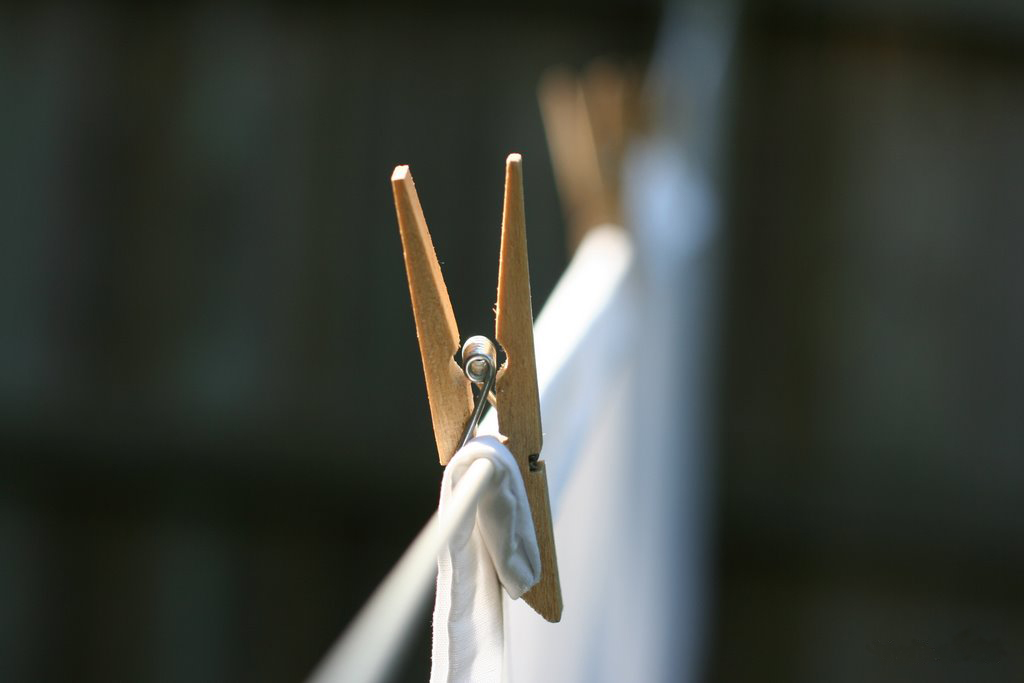
We dried everything on the line when I was growing up.1

Today, I'm hanging clothes out for the first time this spring. The weather is iffy, but I'm going for it. I figure if they get wet, it's rain water, the best there is...and they'll dry eventually.

Nothing stopped Grandma Fitzpatrick
from hanging clothes - not even floods!
I love it all out on the line. And I actually LIKE the stiffness line drying can put in things like sheets. At least the old-fashioned heavy cotton white ones. The ones you buy now are so limp and wimpy - they are not as heavy and don't last as long. I decided to find some and did (online) - linen, heavy weight, white, and a bit pricey. But they will be well worth it if they are as advertised.  They'll last, and we'll enjoy them while they do.

Once again, I will jump into a bed made with freshly dried sheets - not just the smell of the outdoors but the stiff crisp FEELING of them.


1 - We used to find twigs and worms and other bugs snuggled into the creases as we took items out of the basket and folded them. All part of the process.

Once in, the clothes that required ironing would be separated from the rest.  They were never ironed immediately but a bit later on, on another 'ironing day'.  Until then they lived in a wood bushel basket, each layer sprinkled to prep for ironing.  I loved the smell of freshly line-dried cotton, sprinkled with water, then the hissing of the iron as it glides over it. Wrinkles disappearing like magic. You get into a rhythm, it becomes meditative. It gives the mind times to relax, heal...go on vacation.
 

2.13.2011

Mom's Sewing Machine

I learned to sew on this machine... 
[Photo:  Betty Jean Short Thorsvig]
Earlier today, my sister Betty posted about our mother's old Singer sewing machine.  Mom passed it on to Betty, and over the years it has served (and still does) her well.  They don't make 'em like that anymore. It's the one I learned on.

Workhorses, that's what the old Singers are.  Solid metal throughout, working parts made with clockwork precision.  My Mom always said, keep it clean and well-oiled, and it'll serve you all your life.  But they're more than workhorses - they are things of beauty.
I remember when I joined the Humboldt Stick-to-It 4-H club.  I was 9 years old, and I did two projects - food and sewing.  For sewing, I had to demonstrate I had learned the goals of the project by sewing a simple garment;  I chose an apron.  I was entering the strange world where you had to measure once then measure again, and precision was preached.  Exactness was the gospel, and nothing less than aspiring to (and hopefully achieving) excellence would do.  There were right and wrong sides to fabric, you did not 'go against the grain'.  If you were daring enough to choose a complex pattern, you soon learned the art of matching  so a pocket would blend in like camouflage.  Inset sleeves and zippers were years away.

I completed that apron - a purple, green and white floral calico print - on my mother's old Singer.

1.16.2011

"Make a wish..."

From our recent chicken 
dinner roast - Bill won!


A tradition my family practiced, not only at Thanksgiving, but whenever we had a chicken throughout the year, was drying the wishbone, then later pulling it for a wish.

12.27.2010

1917 Recipe

Hand-written recipe by Elizabeth Jane (Fitzgerald) Fitzpatrick,
my grandmother - used in the "Economy Cookbook" of 1917,
put out by the Ladies of St. Vincent...
Transcription of text in document

War Cake (Eggless, Butterless, Milkless)

Put in a saucepan 1 cup raisins, 1 cup sugar, scant 1/2 cup lard, 1 1/2 cups water, 2 teaspoonfuls cinnamon, 1/4 teaspoonful of cloves and nutmeg, pinch salt.

Boil them for five minutes and when cool add teasponful soda dissolved in little warm water, then add 2 cups of well-sifted flour with 1 teaspoonful of baking powder.

Bake in a shallow greased pan for 30 minutes in a moderate oven.

10.14.2010

Hinterland's Who's Who


I grew up listening to Hinterland's Who's Who on CBC television.  These nature viginettes were spellbinding to me, because they were focused and short.  Ahead of their time, really.  The haunting theme1 immediately catches your attention, and you never forget it.


1 - The original Hinterland Who's Who music is called "Flute Poem" and was composed by John Cacavas

9.08.2010

MN90: The Greatest Minnesota Athlete to Run on Four Legs

MN90: The Greatest Minnesota Athlete to Run on Four Legs

My father often talked about Dan Patch, the great harness racing horse. His father saw him race, and he grew up hearing about him. We had a love of horses in common and often watching horse racing on TV (I began following the Kentucky Derby in 1970) and we tried to attend the harness races every summer at the Pembina County Fair in Hamilton, ND...

8.21.2010

Dad's War

I first found out that my father had been a soldier when I was a little girl watching television with him one night. The show was Combat!, a World War II drama set in the European Theatre of the war. I was in awe of the characters on that show, and learned about the Second World War through it. Dad shared he had been in that war, but in the other main area of it - the Pacific Theatre.

Later, as I was growing up, occasions came up where Dad would share a little bit more about what he did in the war. I noticed my Mom was a bit concerned about Dad talking about it, saying it might bother him. I found out when he first came home from the war, he had nightmares, sleepwalked, etc. One dream he would have, Mom said, would cause him to mutter '...no place dry to sleep', recalling time spent in foxholes during tropical rains. He'd get out of bed sometimes during those dreams and try and get into dresser drawers to sleep, as if it was a dry corner of the foxhole he had found. He'd thrash around during his sleep, waking Mom and she'd try and help him calm down. Even after many years, by the time he was talking about it to me, there were times I could see tears coming to his eyes as he recalled a friend named Alabama having his head blown off in front of his eyes.

So learning about Dad's experiences in WWII came slowly. As years passed, he would talk about them more. I interviewed him in high school when I started being more active with family geneaology (I hope to make available online his oral histories someday...) During family gatherings, he'd sometimes talk about it with my brother-in-laws, and I'd stick close by to hear what I could. Later, he recorded memories on tape and wrote many of them down on paper. I learned many of his army buddies' names - Alabama, Wassing, Sickles, Stoneroad. I met Wassing - Marv Wassing - a few times when I was a little girl. Later, when Dad and Mom had their golden wedding anniversary, I attempted to invite Marv and his wife to attend, but he was very ill. Dad and I called him on the phone and spoke with him for awhile. It was the last time they spoke - Wassing died a few weeks later.

Dad had lost contact with Stoneroad. He mentioned often how he'd love to get in touch with him again. In the late 1990's, I made it my mission to track him down. I did a lot of searching online, including military reunion groups. After a lot of research and many emails, I located someone who knew how to get in touch with him. I emailed a relative, and soon we had his current address and phone number. I passed it on to Dad, and shortly thereafter Dad called Henry Stoneroad, his old friend. Stoneroad was very surprised - but pleased - to be hearing from Dad. Tentative plans were made for them to meet as soon as they could. Ideas were tossed around. Alas, due to circumstances and Dad's decreasing health, they never were able to meet in person. They spoke a few more times on the phone, but that was all. I'm still thrilled to have been able to get them back in touch with one another...

Dad was in the 127th Infantry of the 32nd Division, or the "Red Arrow Division". When Dad was with the 127th, they were involved in the campaigns in New Guinea, Philipines, and mainland Japan (occupational forces...)

I loved my father for many reasons - he was a loving, gentle man with a quiet sense of humour and an unquenchable thirst for knowledge. His humble beginnings and later life may appear unremarkable, but he was anything but. He showed me how a man should love a woman, by the loving and warm way he cared for my Mom (and it wasn't always easy...) I was very proud of him.

Not long after we lost Dad, I discovered the Veteran's History Project. I sent for their Project Kit, filled out the paperwork, and sent it in with a DVD of his voice and images, plus copies of his written memiors. They are now part of the official record in the Library of Congress...